
Your eyes work hard every day. They help you drive, cook, read, and take in sunsets. However, they may unexpectedly change over time. A cataract is one typical alteration. A cloudy patch in your eye's natural lens is called a cataract. This lens is located behind your pupil. It facilitates clear vision by helping you focus light. Your vision becomes blurry when it becomes cloudy.
It frequently occurs slowly. For this reason, a lot of people fail to notice the early signs of cataracts. They are slow warning signs. For early detection of cataract symptoms, you need to stay aware of minor indicators that can safeguard your vision and normal day-to-day functioning.
Book An Appointment
What Are the Early Signs of Cataract You Should Not Ignore?
Let’s Understand Cataracts
You must have seen the lens in a camera. Your eyes contain a similar lens. To let light flow freely through it, the lens needs to be transparent or clear. If this lens is clouded, then it makes your natural eye lens look cloudy, just like a frosted window. This occurrence is called cataracts.
As a person ages, cataracts can develop naturally in the lens of the eye. They typically begin slowly, so you won't see any changes in your vision right away. But certain other causes like prolonged intake of steroid medicines, health conditions, and injuries can also cause the development of cataracts.
They start developing gradually; hence, there won't be any immediate effect on your vision. You will only realise it when it affects your daily activities. Now, let us look at some early signs of cataracts.
Blurry or Cloudy Vision
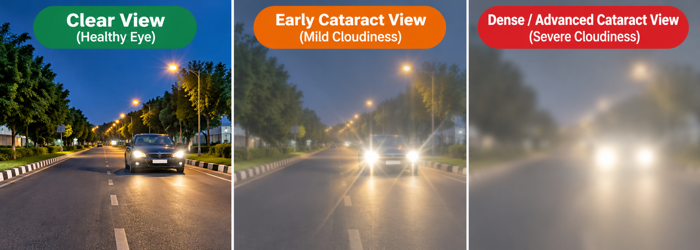
- This is the most common first sign. Objects may look hazy. Cataracts often make it hard to focus on things while reading; words may be indistinct. You may even find it challenging to recognize faces across the room. It may seem to you that you see blurry figures.
- At first, you might blame tired eyes. Or you might feel that you finally need new glasses again. But if the blur does not go away with a new prescription, a cataract could be the reason for it.
Difficulty Seeing at Night
- Have you observed that headlights seem to be extremely brilliant? Is driving at night a difficult task for you? Cataracts can also start causing problems when walking in the dark.
- You might also observe small halos around lights. For instance, the street lighting as well as the headlights can appear surrounded by halo rings since light is dispersed in multiple directions due to passing through a cataract.
Colours Look Faded or Yellowish
- Cataracts can change how you see colour. Whites may look yellow. Blues may look duller. You may not initially notice this change because it occurs so slowly.
- Some people only become aware of this change following cataract surgery. After the cloudy lens has been changed.
- The colours will seem more vibrant and brighter. This contrast shows how much their vision had been impaired by the cataract.
Double Vision in One Eye
- This sign surprises many people. You might think that double vision only happens with both eyes open. However, the effect of cataract can lead to the phenomenon of double vision even when one eye is closed. This happens because light rays are scattered unevenly in the retina.
Frequent Prescription Charges
- Do you feel like your glasses never seem to work? Do you need new lenses every few months? This could point to a cataract.
- As the shape of the lens changes, your prescription will also be modified. The fact that you keep getting new prescription glasses but your vision remains the same could indicate the presence of cataracts.
Difficulty Reading or Doing Close-Up Work
- In many cases, reading small print will become a challenging experience. You would notice that you are getting tired of sewing, cooking, or dialing your phone. This struggle with near vision often signals early lens changes.
A Feeling of Looking Through a Foggy Window
- Many patients describe this exact feeling. It is not pain. It is not even redness from eye dryness. It is just a hazy perception in your vision over everything you see. This description alone sends many people straight to the eye doctor.
- It is one of the clearest and strongest signs that vision issues are coming up.
When Do Cataract Symptoms Require Cataract Eye Surgery?
Why Early Detection Matters?
You might wonder, “Why should I worry about mild blurriness?”
But here is exactly why early action matters a lot more than you think. It is beyond prevention. It is a cure.
- Firstly, cataracts do not go away on their own. They tend to grow slowly over months or years. Left unchecked, they can seriously affect your vision and safety, especially while driving.
- Second, early detection gives you options. Your eye doctor can monitor the cataract’s growth. And when the time comes, they can assist in directing you towards surgery that is still considered one of the safest and most efficient treatments in the field of medicine.
- Third, cataracts may conceal other eye disorders. A thorough eye examination can reveal the problem in its initial stages. Ignoring your regular eye examinations might mean overlooking not only cataracts.
Who Is At Greater Risk?
Although age is a common cause of cataracts, there are other reasons that put you at higher risk. These include:
- A family history of cataracts
- Diabetes or other health conditions
- Smoking
- Excessive drinking habits
- Long-term exposure to sunlight without protecting the eyes
- Previously suffered eye injuries or surgeries
- Use of steroid medications for a long period of time
In any case, or all cases, if these apply to you, it would be wise to start testing your eyesight frequently. You need to set up an appointment with an ophthalmologist for an eye test even when everything is going well.
When to Consult a Doctor?
Don't wait until your eyesight is impaired. Go for an eye appointment if you observe the next 6 initial symptoms of cataracts:
- Blurriness and haziness in vision caused by cataract, no glasses can help.
- Trouble driving at night
- Glare or halos around lights
- Colours that seem duller than before
- Frequent changes in your eye prescription
- Any sudden vision changes
Routine eye exams are important, and they also matter even without any of the six mentioned signs.
Conclusion
In conclusion, just like other parts of the body, the eyes also require proper maintenance. You cannot stop the aging of the cornea. However, there are certain signs that tell you when to take some precautionary measures. For example, dull colours, too much brightness, blurred vision, and regularly changing prescriptions are some early warning signs of cataracts.
You are in good hands, with personalized care, top-notch equipment, and a dedicated team focusing on your safety at every step. Smart Vision Hospitals is the go-to choice for thousands of patients who appreciate our straightforward advice and real results. See your world clearly and brightly. Make Smart Vision your smart choice for the future.
Book your consultation today and take the first step toward clear vision!
Visit Smart Vision Eye Hospitals to win your chance at renewed vision with SMILE LASIK.
Are you ready to embark on your journey to clearer and brighter vision?
Visit our branches at Smart Vision Eye Hospitals and ask your questions. Book your first time consultation for free now!
Start your clear future now.
Book your free check today.
Visit our Home Page to learn more. Check Our Doctors page to meet our expert team. Read our About Us page to see our care. Explore our LASIK page for full details.
Contact Smart Vision Eye Hospital now. Your path to clear sight starts here.
Take the first step. Join 12 lakh+ happy patients. Your eyes will thank you.