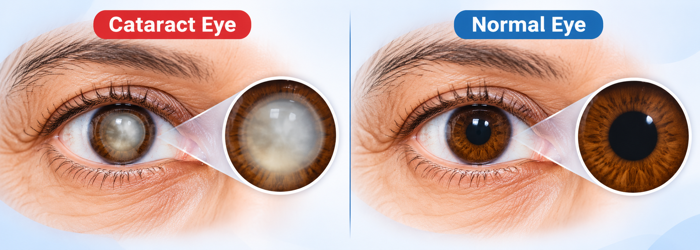
Your eyes function like mini-cameras. Light goes in through a transparent lens. This lens channels light rays to the inner side of the eyeball. The information is processed by the brain into images. When this lens turns a little cloudy. You get cataracts. And it can slowly steal your clear vision.
Cataracts are common. They come with age naturally. In fact, most people get them when they live long enough. It is a treatable issue. Let us understand “what is cataract” and get to know the symptoms, causes, and the treatment needed to cure it.
Book An Appointment
What Is Cataract? Understanding Cataract Causes and How It Develops
What Is a Cataract?
A cloudy area on your eye's lens is called a cataract. Consider your lens as a camera lens. Light can easily pass through it when it's clean. The image becomes hazy and challenging to see when it is foggy.
Cataracts develop gradually. They are not harmful. The majority of people initially fail to notice them. But the cloudiness spreads over time. Colours look dull. Lights seem too bright. Reading gets harder.
Cataracts are formed in one or two eyes. They cannot move from one ocular area to another like an illness. Each cataract undergoes its own maturation.
What Causes Cataracts?
There are several factors that can cause your eyes to develop cataracts. Let us have a look at the many cataract causes, cataract symptoms, and overall, the general culprits.
Aging
- It is the top cause. Your lens is made of water and protein. As you age, some of the protein can clump together. This clumping creates cloudy spots. Over the years, those spots grow.
- The development of cataracts usually occurs after age 60.
UV Light Exposure
- Excess exposure to sunlight can harm your eyesight. The UV rays will contribute to the progression of cataracts. Wearing sunglasses is one way to keep your eyesight safe.
Diabetes
- High levels of blood sugar will result in many health issues. Your eyes are no exception. People suffering from diabetes get cataracts sooner than the majority of people.
Smoking and Alcohol
- Smoking is harmful since it introduces many poisons into the human body. These chemicals can damage the lens. Drinking large quantities of alcohol causes similar side effects.
Eye Injuries
- A blow to the eye can trigger a cataract. Sometimes it forms right away. Other times, it takes years to develop after the injury.
Steroid Use
- Using steroids for long periods leads to cataract development.
Family History
- Genes play a role too. If your parents had early cataracts, you might be more likely to get them too.
Other Eye Injuries
- Sometimes, surgery for certain other eye diseases can result in the appearance of cataracts in the future. Your eye specialist has to explain this process to you as well as what risks are connected to it.
What Are the Common Cataract Symptoms and When Is Surgery Needed?
Common Symptoms of Cataract
Cataracts grow slowly. That is why symptoms often creep up on you. Here is what you watch out for:
- Blurry vision Things look fuzzy, like looking through a foggy window.
- Faded colours Colours may look washed out or yellowish.
- Trouble with glare Headlights, lamps, and sunlight might seem too harsh.
- Poor night vision Driving at night becomes harder.
- Double vision You might see two images in one eye.
- Frequent prescription changes Your glasses or contacts stop working like they used to.
- Halos around lights Bright lights may look like they have rings around them.
If you see these signs, there is no need to panic. But you should not ignore them either. You will know whether you have cataracts after a simple eye test.
How does the Process of Cataract Diagnosis Take Place?
Cataracts are formed in one or two eyes. They cannot move from one ocular area to another like an illness. Each cataract goes through its own development stages. Sometimes, it’ll also dilate your pupils. This gives a clear view into the back of your eye.
The whole process takes less than an hour. And it can detect cataracts many years before they create big problems for you.
Is it Possible to Avoid Cataracts?
You cannot stop aging. It is possible to delay the appearance of cataracts by changing your way of life. Here are some recommendations. You have to wear glasses with UV light filtering; you should stop smoking. And after 40, you need to get regular eye tests done.
These habits will not guarantee that you will never contact cataract. But they can delay it and protect your eyes from issues that come on with age.
When Do You Need Cataract Surgery?
Not every cataract needs surgery right away. In fact, many people live with mild cataracts for years without any treatment. But these cataract symptoms, cataract causes give you the signs that you need to get surgery:
Your Vision Interferes With Daily Life
- This is the biggest sign. Can you still drive safely? Can you read a book or watch TV without strain? Can you recognize faces from across the room? If cataracts make your everyday tasks tough, then it is time for you to consider surgery.
Glasses Don't Help Each Time
- Early on, a new glasses prescription might sharpen your vision. But cataracts eventually reach a point where glasses cannot fix the blur.
- At first, one may improve his vision by getting glasses. However, cataracts always develop so that eventually no pair of glasses makes a difference.
It Involves Your Safety
- If your vision leaves you in danger of falls, accidents, or missed medications, do not think twice about that! Your safety matters more than convenience.
It’s Blocking Treatment for Other Eye Conditions
- At times cataracts obscure other eye disorders, such as diabetic retinopathy or macular degeneration. Once they are removed, the doctor will be able to treat each of those disorders properly.
The Doctor Recommends Surgery
- Ultimately, your surgeon will be your guiding force. They will conduct a thorough review of your symptoms, lifestyle, age-factor, and overall eye health in making their decision concerning the course of surgery.
During Cataract Surgery?
- Cataract surgery is one of the safest and most common surgeries done today. Here are the main steps of what will happen.
- Your surgeon numbs your eye with drops. They make a tiny incision. Then, they remove the cloudy lens using gentle ultrasound waves. Finally, they insert a clear artificial lens, called an intraocular lens (IOL), in its place.
- The whole procedure takes around 15-30 minutes. Most people go home the same day. Recovery is quick too.
- Many patients see improved sharpness and clarity in vision soon after surgery.
Conclusion
Cataracts are a common indicator of aging in the eyes. They form slowly and quietly.
They can be controlled by you. With knowledge about the causes and symptoms of cataracts, you can address them early before they lead to complications.
Cataract surgery is safe and successful. There are experienced eye specialists like Dr. Harsha Vardhan Reddy who perform good cataract surgeries at Smart Vision Eye Hospitals. Don’t mess around until you notice blind spots in your vision.
You are in good hands, with personalized care, top-notch equipment, and a dedicated team focusing on your safety at every step. Smart Vision Hospitals is the go-to choice for thousands of patients who appreciate our straightforward advice and real results. See your world clearly and brightly. Make Smart Vision your smart choice for the future.
Book your consultation today and take the first step toward clear vision!
Visit Smart Vision Eye Hospitals to win your chance at renewed vision with SMILE LASIK.
Are you ready to embark on your journey to clearer and brighter vision?
Visit our branches at Smart Vision Eye Hospitals and ask your questions. Book your first time consultation for free now!
Start your clear future now.
Book your free check today.
Visit our Home Page to learn more. Check Our Doctors page to meet our expert team. Read our About Us page to see our care. Explore our LASIK page for full details.
Contact Smart Vision Eye Hospital now. Your path to clear sight starts here.
Take the first step. Join 12 lakh+ happy patients. Your eyes will thank you.