
Your eyes matter. So does your wallet. This is why the question pops up:
“Will insurance pay for eye surgery, or will you have to take the entire bill on your own?”
The answer lies in one important aspect of your life. It can be a personal choice or a medical need depending on the case of your eye power. This blog breaks it down for you.
Book An Appointment
Is LASIK Eye Surgery Covered by Insurance Compared With Other Eye Surgeries?
Why LASIK Rarely Gets Covered?
LASIK reshapes your cornea. It fixes your near-sightedness, farsightedness, and astigmatism. It works fast and gives good results. It is quick and reliable. It is popular in metro cities like Delhi, Mumbai, and Hyderabad because patients report good results.
But here is the catch: most insurers see LASIK as an elective, not as a critical need. You can still use glasses or contacts. That makes LASIK a good, reliable upgrade but not a medical solution. Hence, most insurers will never pay for it.
This surprises a lot of people. We assume that any eye surgery counts as “medical”. Yet, it does not work that way. Insurers will draw a clear line between what is necessary and what is just a bonus. Almost all insurance policies in India exclude it.
The Silver Lining: Tax Breaks and EMI Options
Here is some good news. Even though insurance will not cover LASIK, you still have a few ways to save your wallet.
Under Section 80D of the Income Tax Act, you can claim deductions on health insurance premiums. But LASIK itself does not qualify as a direct deduction unless prescribed for a specific medical condition. Still, many eye hospitals and eye care chains, like Smart Vision Eye Hospitals offers no-cost EMI options and even direct cash discounts for surgeries.
These plans split your bill into easy monthly payments.
LASIK vs Cataract Insurance: Why Can Coverage Differ?
Cataract Surgery: The Insurance Favourite
- Cataract surgery sits on the other end of the scale. Insurers always cover it. It is due to the fact that cataracts steal your vision over time. Left untreated, you go blind. That makes this surgery a medical need, not some optional cosmetic choice.
- During cataract surgery, your doctor removes the clouded lens. They replace it with a clear artificial lens called an IOL or intraocular lens. Medicare covers this procedure as well as various other insurers. LASIK vs Cataract insurance gets a new bonus here.
- But only the basic IOLs get coverage. Premium lenses that correct your astigmatism and reduce the need for reading glasses charge more. Insurance only pays for the standard lens.
- So, a LASIK-like outcome from cataract surgery still costs a bit more. Even so, the base eye surgery will not break your budget the way an elective LASIK procedure can.
PRK: The Insurance Twin of LASIK
- Photorefractive keratectomy, or PRK, works a lot like LASIK. It also uses a laser to reshape your cornea. It just takes longer to heal. Surgeons mostly suggest it for thinner eye corneas. Insurance treats PRK just like LASIK. That means no coverage in almost every case. Both procedures fall into the “elective refractive surgery” class.
- Your insurer will not care if PRK can suit your eyes better. They will not pay for it.
Corneal Transplants
- A corneal transplant replaces damaged or diseased corneal tissue. Conditions like keratoconus and corneal scarring require corneal transplant surgery. Severe eye infections also call for this surgery. Without it, patients can lose significant vision or even go blind.
- Corneal transplants get covered due to the serious health hazard it is. A damaged cornea threatens your health. That triggers coverage under most health plans. You will still need to pay for copays and deductibles. But the bulk cost gets covered.
Glaucoma Surgery Against Vision Loss
- Glaucoma harms the optic nerve. High eye pressure causes most cases. Left untreated, it can cause permanent vision loss. That is why your insurers treat glaucoma surgery as a true medical need. Many patients deal with glaucoma due to age related side-effects. It is covered by insurance policies due to this fact alone. It causes vision loss over a period of time. The onset of this condition is mostly undetected. You have to take careful precautions for glaucoma.
Retinal Surgery: Emergency-Level Coverage
- Retinal detachments and other retinal conditions demand fast treatment. Without immediate eye surgery, you risk permanent vision loss.
- Procedures like vitrectomy, scleral buckle surgery, and laser photocoagulation all come under standard medical coverage. Your insurer treats it the same way it will treat a broken bone.
The Pattern Behind Insurance Decisions
Insurance companies keep things very simple and direct. They will ask you just one question:
“Does this surgery treat a disease or injury, or does it just make life more convenient?”
- Cataracts, glaucoma, corneal disease, and retinal detachment all put your vision or eye health at risk directly. Insurers cover these as delays in these cases cause permanent harm to the patients. They are dangerous eye health situations.
- LASIK and PRK improve your comfort and convenience. Yet, they fail to cure diseases or prevent blindness. This is the sole reason why insurance companies do not back them in the claims you push for.
- So, in refractive vs therapeutic surgeries, LASIK and PRK surgery are trickier to get insured for.
What This Means for Your Wallet
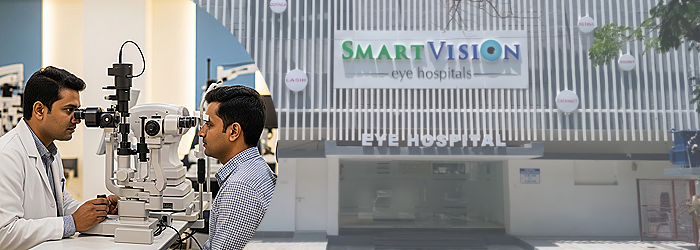
Thinking about LASIK? Plan your budget first. You will likely need to pay out of your wallet. But many eye hospitals help you out. Smart Vision Eye Hospitals, for example, offers no-cost EMI plans. They also give heavy cash discount offers to soften the blow.
Ask your employer about vision plan discounts too. If you are struggling with glaucoma or any other serious retinal issue, call your insurer early. For corneal transplants, ask about pre-authorization rules before you book.
Get clear on your copay amounts and extra deductibles before the surgery day. Some plans need approval before they will cover the full procedure.
Conclusion
LASIK gives you freedom from glasses, but the price of freedom is paid by you. It is no surprise here that insurance companies draw a strict line between vision elective correction surgeries and medically necessary eye care.
Cataract surgery, glaucoma treatment, corneal transplants, and retinal repair all fall on the covered end of insurance as they prevent direct vision loss.
Some important questions you need to keep in mind are:
- Are there any in-network surgeons who perform LASIK?
- Does my plan cover premium lens options, or only standard ones?
- What is my deductible, and have I already met it this year?
Before you make any bookings, understand your eye issue and the category it fits. This protects you from surprise bills. It will also save you guesswork in your financial decisions. Talk to your eye doctor about your specific eye condition.
Communicate with your insurer about the specific coverage costs for refractive vs therapeutic cases. Then move ahead with what budget you can pay for your medical surgery.
Visit our team at Smart Vision Eye Hospitals to secure your future with great sight.
Start your clear future now.
Book your free check today.
Visit our Home Page to learn more. Check Our Doctors page to meet our expert team. Read our About Us page to see our care. Explore our LASIK page for full details.
Contact Smart Vision Eye Hospital now. Your path to clear sight starts here.
Take the first step. Join 12 lakh+ happy patients. Your eyes will thank you.