You want sharp vision without glasses. You have heard about SMILE LASIK. It sounds simple, fast, and modern. But before you book a surgery date, you need the full picture. Every eye surgery carries risks. SMILE is no different.
This blog will help you understand what can go wrong, how often it happens, and how you can protect your eyes.
Book An Appointment
What Are the Common SMILE LASIK Side Effects After Eye Surgery?
What is SMILE LASIK?
SMILE is short for a long string of complex words. It is not a good choice as an alternative to traditional LASIK. A surgeon uses a laser to create a tiny lens-shaped tissue inside your cornea. Then they remove it through a small incision. No flap. No large cut. Just a tiny opening.
This smaller incision sounds gentler. And in many ways, it is. Studies show SMILE may cause less dry eye than traditional LASIK. It also skips the flap-related risks that worry some patients. Still, “less risky” does not mean “risk-free”.
Read the blog to find out what exactly happens.
The Most Common Side Effects
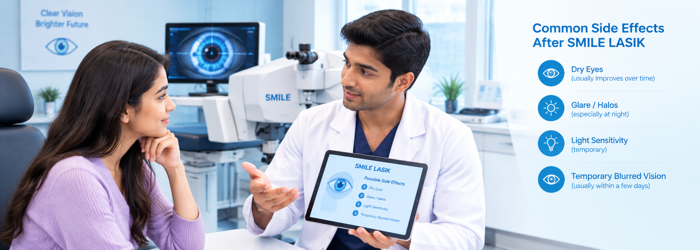
Most side effects after SMILE are mild. They usually fade within weeks. But you should know them all before making a final decision.
- Dry eyes top the list of SMILE LASIK side effects. Your cornea has optical nerves that control tear production. Surgery disrupts these nerves for a while. Your eyes may feel gritty, itchy, or tired. Doctors often prescribe eye drops to help. Most people feel normal again within one to three months. Some feel dryness for up to a year.
- Light sensitivity creates issues for a lot of patients in the first few days. Bright rooms, sunlight, and screens may feel harsh. Shades and sunglasses help too. This usually fades faster than you think.
- Glare and halos show up at night. You might see rings around headlights or streetlights. This happens because your cornea is still healing and adjusting its shape. Most people notice real improvement within a few weeks. A small number still notice mild halos months later.
- Blurry or fluctuating vision is common in the early recovery phase. Your brain and your eyes need time to adjust to your new corneal shape. Vision often improves day by day. Full stability can take four to six weeks.
- Eye redness or a scratchy feeling can happen right after surgery. This is normal healing, not a warning sign, unless it gets worse instead of better.
What Are the Possible LASIK Complications and Risks of SMILE Surgery?
Less Common but Real Risks
Beyond the everyday stuff, a smaller group of patients face trickier problems.
- Under-correction or over-correction means your vision is not completely fixed. The laser removes a precise amount of tissue based on your eye prescription. Sometimes the result falls a bit short or goes a bit too far. You might still need glasses for certain tasks. In some cases, a touch-up procedure can fix this.
- Corneal haze or scarring can develop in rare cases. This can blur your vision slightly. Most cases are mild and don’t need extra treatment. Severe scarring is rare with SMILE.
- Infection is uncommon but very serious when it happens. Any surgery that involves an incision carries infection risk. Surgeons prescribe antibiotic drops to lower this risk. Signs of infection include worsening pain, redness, discharge, or sudden vision loss. Call your doctor right away if you notice these.
- Epithelial ingrowth is when surface cells grow where they should not. It is again extremely rare in SMILE LASIK compared to traditional LASIK. This is one huge perk of the flap-free design.
- Difficulty removing the lenticule can happen during surgery itself. Surgeons sometimes struggle to extract the tiny piece of tissue cleanly. Only skilled surgeons handle this well. It can, however, extend the surgery, or at times, switch to a different process.
Smart Vision Eye Hospitals are staffed with highly professional eye surgeons who have performed decades of successful SMILE LASIK. The team gives you the best eye care and support available.
Rare but Serious Complications
- Ectasia is a serious long-term risk. It happens when the cornea becomes too thin and starts to bulge forward. This is dangerous and can cause permanent vision distortion. permanently. Careful pre-surgery screening catches most people at risk before surgery even happens. This is why your surgeon checks your corneal thickness and shape so carefully beforehand.
- Vision loss is extremely rare. Most studies report success rates above 95% for improved vision without major LASIK complications. Still, no eye surgeon can promise zero LASIK complications. These risks just exist as long as the surgery is done.
- Loss of best-corrected vision means your eyesight, even with glasses, could be slightly worse than before surgery. This is rare, but it has been reported in a very small percentage of cases.
Who Faces Higher Risks?
Not everyone is a good candidate for SMILE LASIK. Certain factors raise your risk of complications.
- Thin corneas
- Unstable or changing eye prescriptions
- Certain autoimmune conditions
- Severe dry eye before surgery
- Keratoconus or other corneal diseases
- Very high prescriptions
A thorough eye exam before surgery catches most of these red flags. Be honest with your surgeon about your full health history. This step matters more than people realize.
How to Lower Your Risk
You cannot eliminate risk fully, as LASIK complications will be there. But you can stack the odds in your favour.
- Choose an experienced surgeon. Ask how many SMILE surgeries they have performed. Ask about their success rate. Experience reduces surgical issues significantly.
- Get a full pre-surgery evaluation. This should include corneal mapping, thickness measurements, and a detailed health history review. Do not skip steps here.
- Follow your aftercare instructions exactly. Use your prescribed drops. Avoid rubbing your eyes. Skip swimming pools and shared water spaces for the recommended time. Wear sunglasses outdoors during recovery.
- Attend every follow-up appointment. Your surgeon needs to track your healing closely. Catching problems early makes them easier to treat.
- Report symptoms immediately. Sudden pain, vision changes, or worsening redness deserve extra care. Take prompt action and call your doctor immediately. Do not delay.
Conclusion
SMILE LASIK is generally safe and effective for the right candidates. It offers you real perks. Recovery tends to be quicker as well.
Your eyes are irreplaceable. Take your time. Choose a surgeon you trust. Ask your questions without any hesitation. Pursue your clear vision.
Visit Smart Vision Eye Hospitals to win your chance at renewed vision with SMILE LASIK.
Are you ready to embark on your journey to clearer and brighter vision?
Visit our branches at Smart Vision Eye Hospitals and ask your questions. Book your first time consultation for free now!
Start your clear future now.
Book your free check today.
Visit our Home Page to learn more. Check Our Doctors page to meet our expert team. Read our About Us page to see our care. Explore our LASIK page for full details.
Contact Smart Vision Eye Hospital now. Your path to clear sight starts here.
Take the first step. Join 12 lakh+ happy patients. Your eyes will thank you.